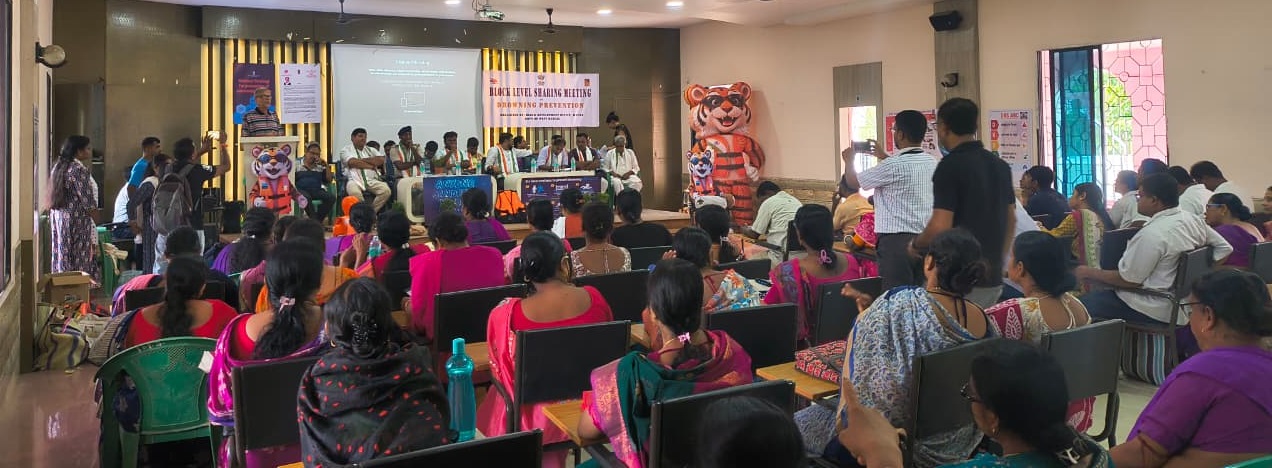
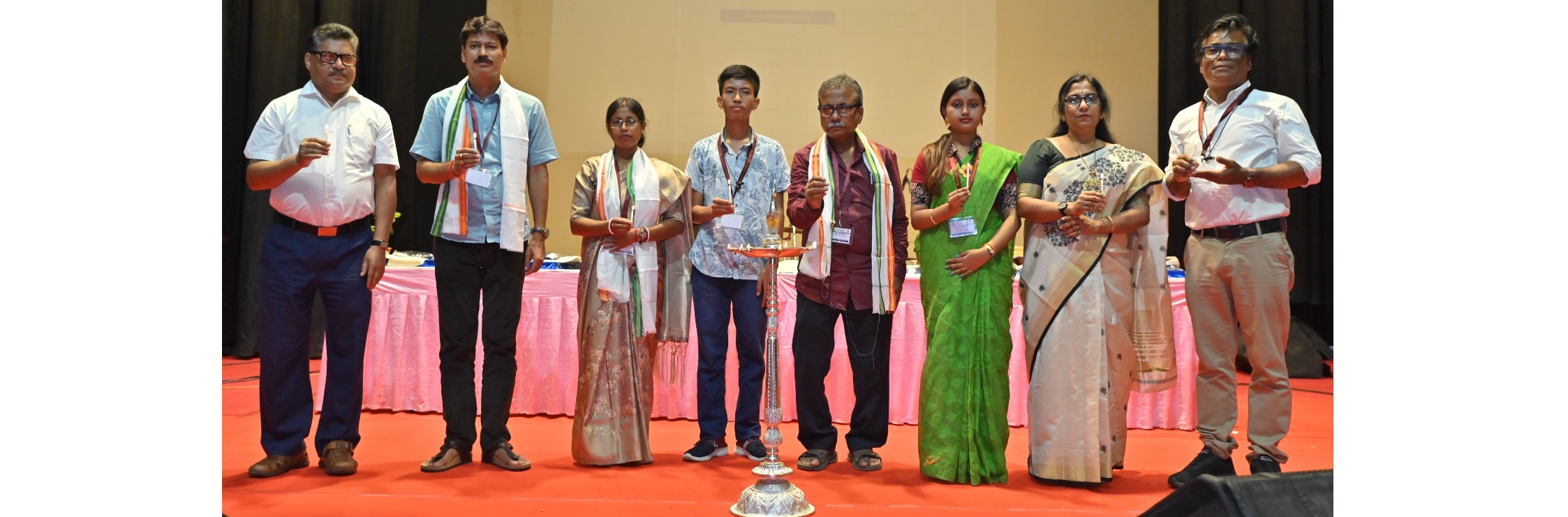
Kolkata: Two community responders who helped save a two-year-old child found floating unconscious in a village pond, were among the lifesavers honoured at a World Drowning Prevention Day programme in Kolkata on Saturday.
Manju and Sonamoni, community representatives associated with the Child in Need Institute (CINI), responded with support from a local health practitioner. After receiving initial emergency assistance, the child was taken to the nearest government hospital, about 35km away, where the medical team’s prompt action helped secure her recovery, according to CINI. The child’s mother attended the programme and expressed her gratitude to the responders and health workers who had helped return her daughter safely to the family.
Five Kolkata Police personnel were also honoured for saving people during recent water-related emergencies. Police representative Debasish Baidya said trained personnel, jet skis and specialised rescue equipment were available, while urging people to exercise greater caution around rivers, ponds and other water bodies.
Organised by CINI under WHO’s 2026 theme, “Unite to Turn the Tide,” the programme brought the organisation’s community experience into direct dialogue with India’s Ministry of Health and Family Welfare and WHO India. It also marked eight years of CINI’s drowning-prevention work in West Bengal.
Dr. Manas Pratim Roy, Assistant Director General, Directorate General of Health Services, MOHFW, Government of India, and Dr Mohammed Asheel, Public-Health Expert and National Professional Officer for Injuries at WHO India, called for coordinated, evidence-based action involving governments, local authorities, emergency services, researchers and communities.

WHO estimates that drowning claims more than 300,000 lives annually—about 30 every hour—and that nearly a quarter of the victims are children under five. The organisation has called for collective action to reduce global drowning deaths by 35% by 2035.
In India, the National Crime Records Bureau’s Accidental Deaths and Suicides in India 2024 report recorded 40,044 accidental drowning deaths—nearly 110 a day. As NCRB data are compiled through State and district crime-record systems, the figure reflects reported cases and may not capture the full burden.
A 2025 statewide survey published in BMJ Global Health, co-authored by CINI’s Sujoy Roy, estimated that West Bengal experiences about 9,191 fatal drownings annually. It found that 45% of the victims were children aged one to nine.
The study also highlighted gaps in formal records. Only 18% of the drowning deaths identified by researchers had an associated death certificate, and drowning appeared as the cause of death on 57% of those certificates.
CINI has also published the second edition of its media compendium, The Silent Truth, collating 907 news reports concerning drowning deaths from across West Bengal. The organisation described the collection as only the “tip of the iceberg”, saying many incidents—particularly in rural areas—never reach either the media or formal reporting systems. As one report may cover several fatalities, the figure represents media coverage rather than a count of deaths.
CINI said it had trained more than 8,000 community members and frontline workers in CPR and emergency response. It also documented 74 separate events organised across West Bengal with government authorities, local institutions and communities. Activities included swimming and water-safety sessions, diving, water polo, rallies, CPR demonstrations, school programmes, community theatre, alpana art and inclusive initiatives with persons with disabilities and disability organisations.
The Kolkata programme featured demonstrations of Float to Live, safe rescue and CPR, along with water-safety plays performed by young people and community teams. Video messages from the Royal National Lifeboat Institution and Bloomberg Philanthropies stressed the importance of research, training and community participation.
Dr. Indrani Bhattacharya, Secretary and CEO of CINI, said that communities had been the organisation’s greatest teachers. “When people are prepared, trained and connected to responsive public services, lives can be saved,” she said.
Alongside the celebration, the elected chief minister of a Child Parliament—a non-political forum for children in Dakshin Dinajpur—raised a forward-looking question. Referring to India’s Strategic Framework for Drowning Prevention, unveiled in December 2023, the young representative asked how far stakeholders had progressed in translating the framework into action.
The question was constructive, but it placed a clear measure before the adults in the room: safer water bodies, better-prepared communities and fewer preventable deaths. Time will tell how soon the young parliamentarian receives that answer.